Opening modern shortcuts in TeamsSearchApp
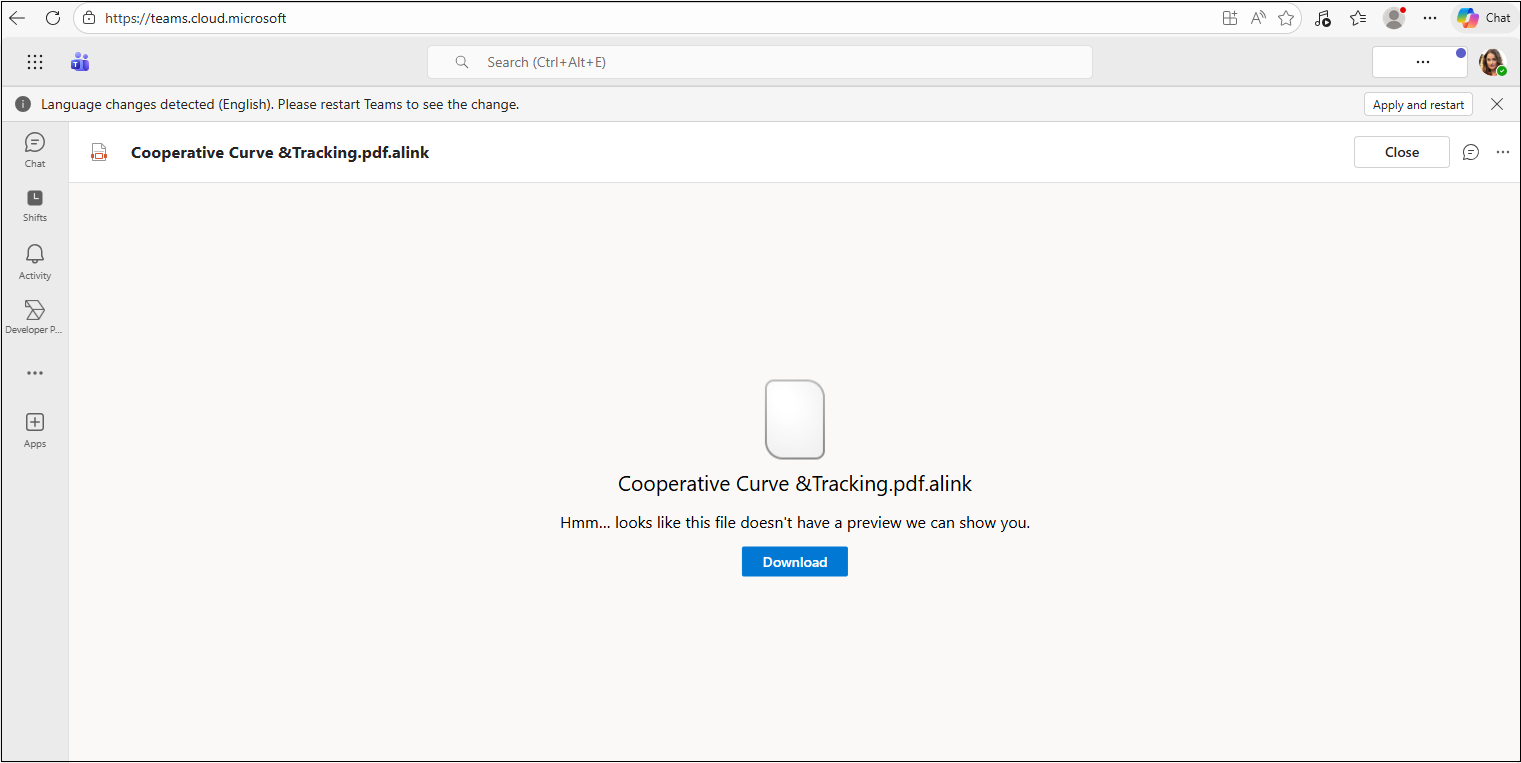
If the TeamsSearchApp is installed in Microsoft Teams and there are modern shortcut files in the selected team, users can open these files directly through the TeamsSearchApp. This option is available because if you simply click the file in the post, Teams will attempt to open the shortcut itself (in .alink format) rather than the original archived file, so the actual file content will not be displayed.
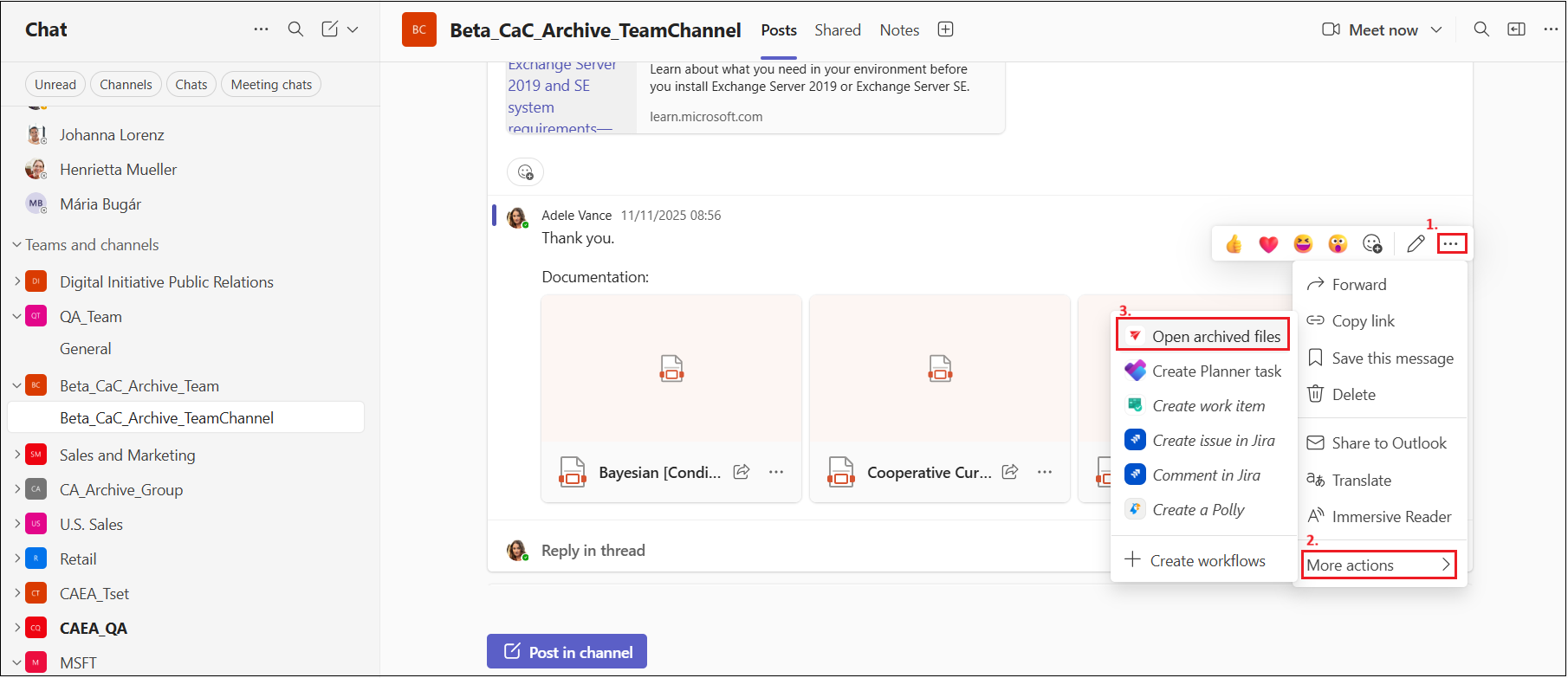
In the post containing the shortcut files, click the context menu (…) and select 'Open archived files‘.
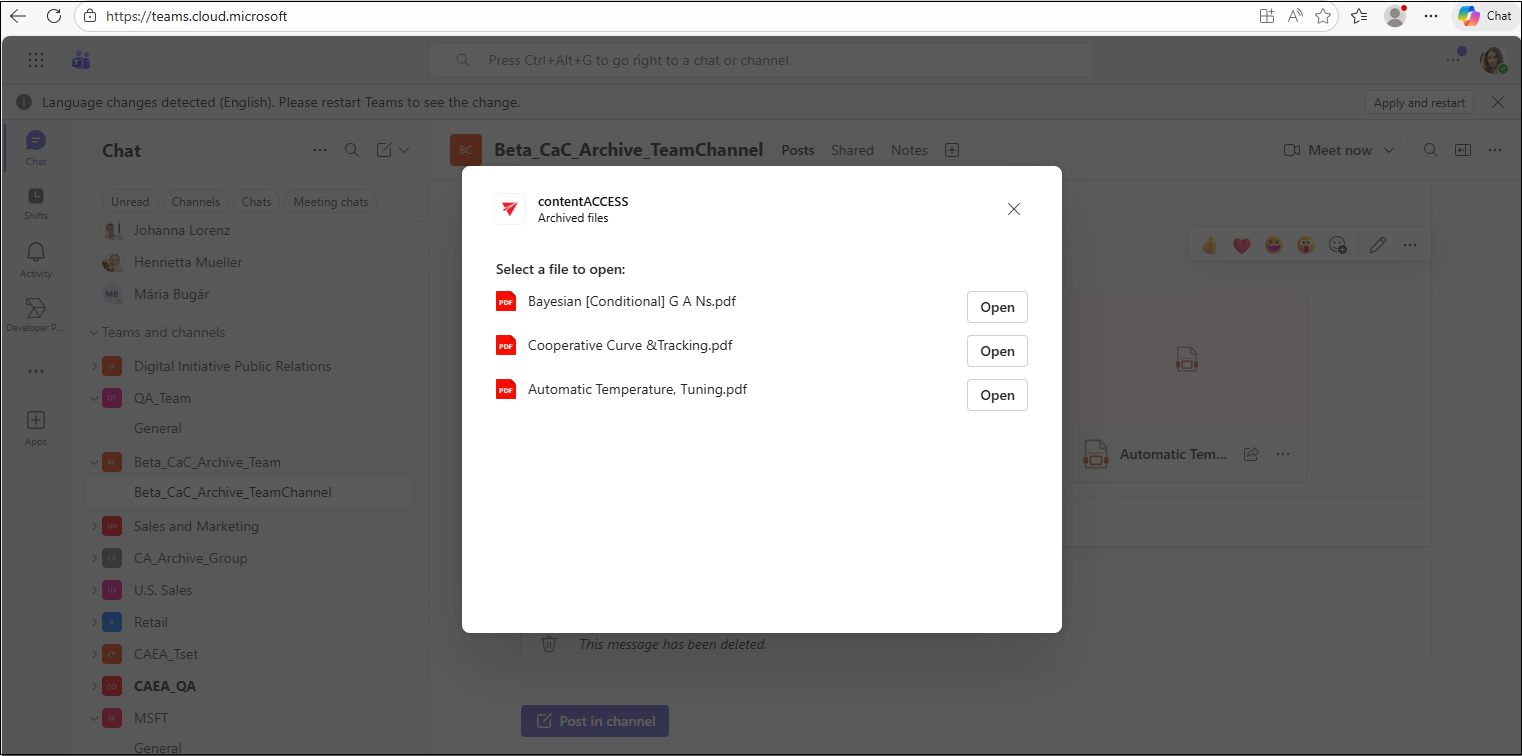
Upon clicking on the option, a contentACCESS window will appear, and on first use, you will need to sign in. Clicking the ‘Sign in‘ link opens the contentACCESS login page in a new browser window, and after successfully logging in, you are automatically redirected back to Teams, where the contentACCESS window displays the files along with the Open button.
If consent has not previously been granted for the application, the following Microsoft message box appears on the login page when you sign in with the selected user:
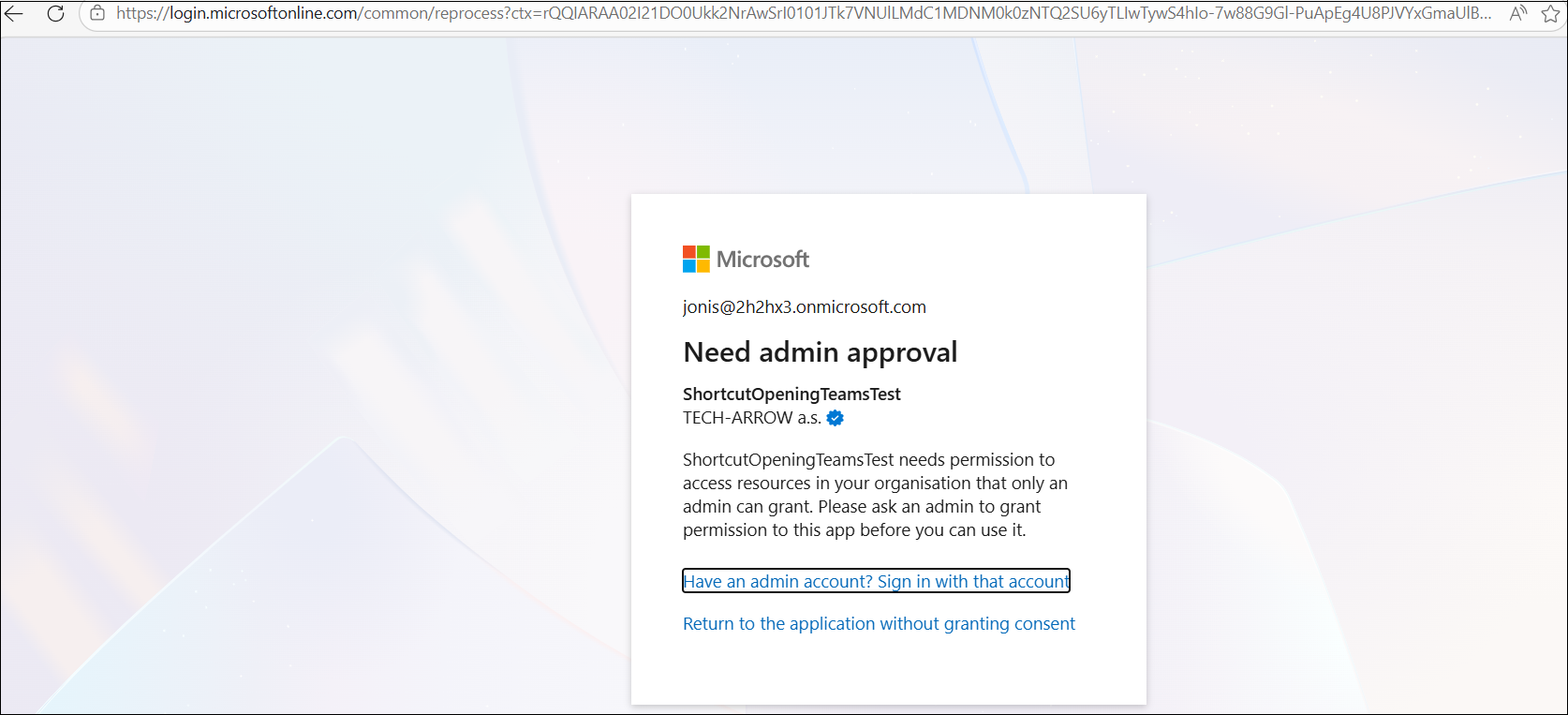
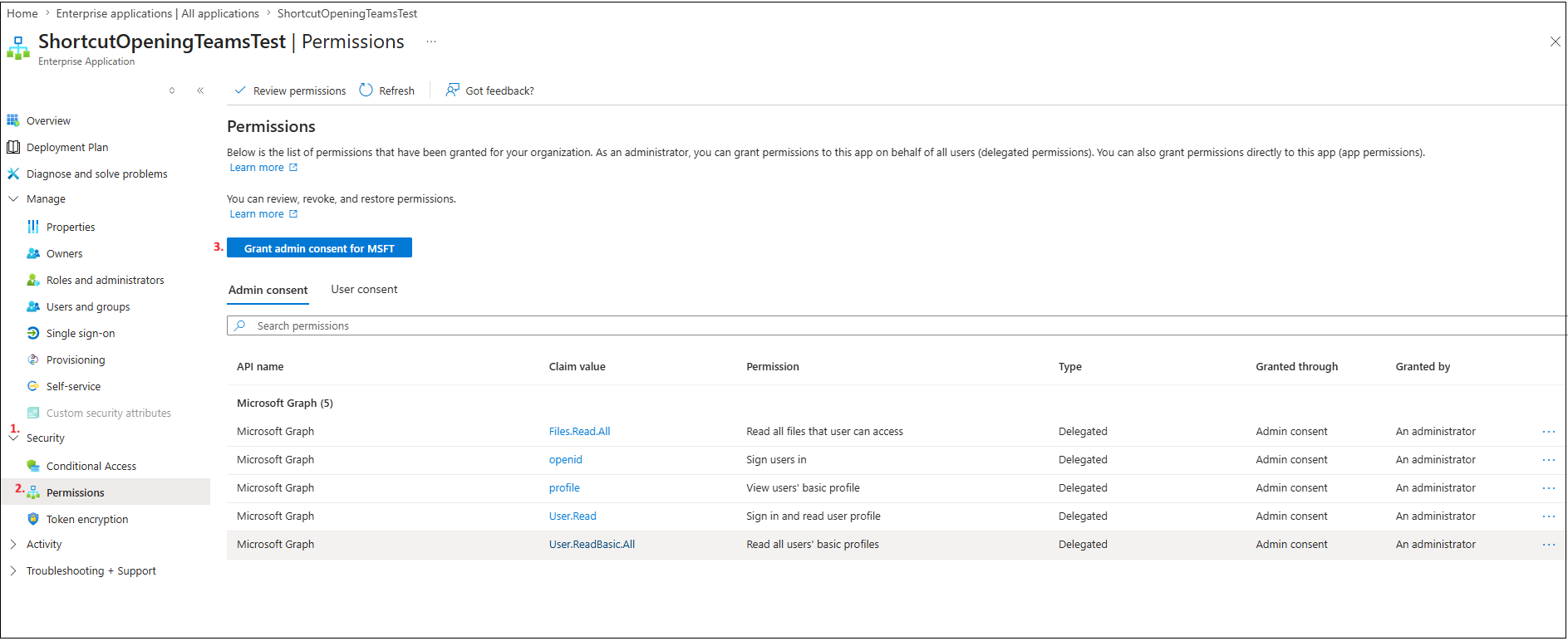
To grant consent, go to the Azure Portal and locate Enterprise applications. Search for the application by name (e.g., 'ShortcutOpeningTeamsTest'), then click on it. Navigate to the Permissions section and click the 'Grant admin consent for TENANTNAME' button. After granting consent, return to Teams and sign in again to access the contentACCESS window with the archived files.
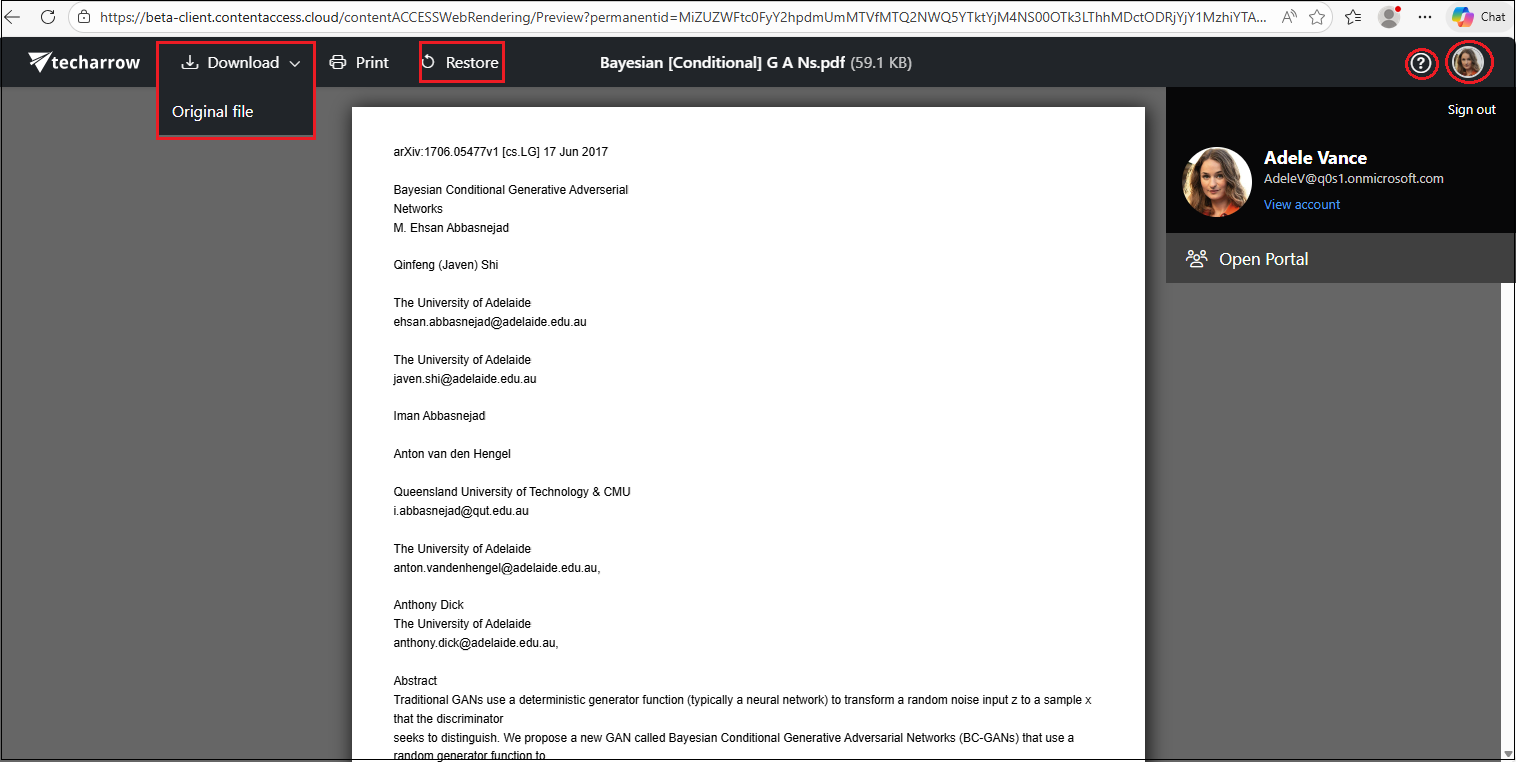
Clicking the Open button for the first time may display the contentACCESS login page again. After signing in, the preview of the selected file opens. In this window, you can download the original document, save it as a PDF (if it is not already a PDF), or restore the shortcut.
Additionally, clicking the question mark (?) opens the relevant chapter of the contentACCESS Portal manual about file previews. By clicking the user's profile picture (or monogram if no profile picture has been set for the signed-in user) in the top-right corner, you can access the user menu to view information about the signed-in user, access their profile by clicking View account, open the folder or entity containing the archived file via Open Portal, or sign out using the Sign out option.
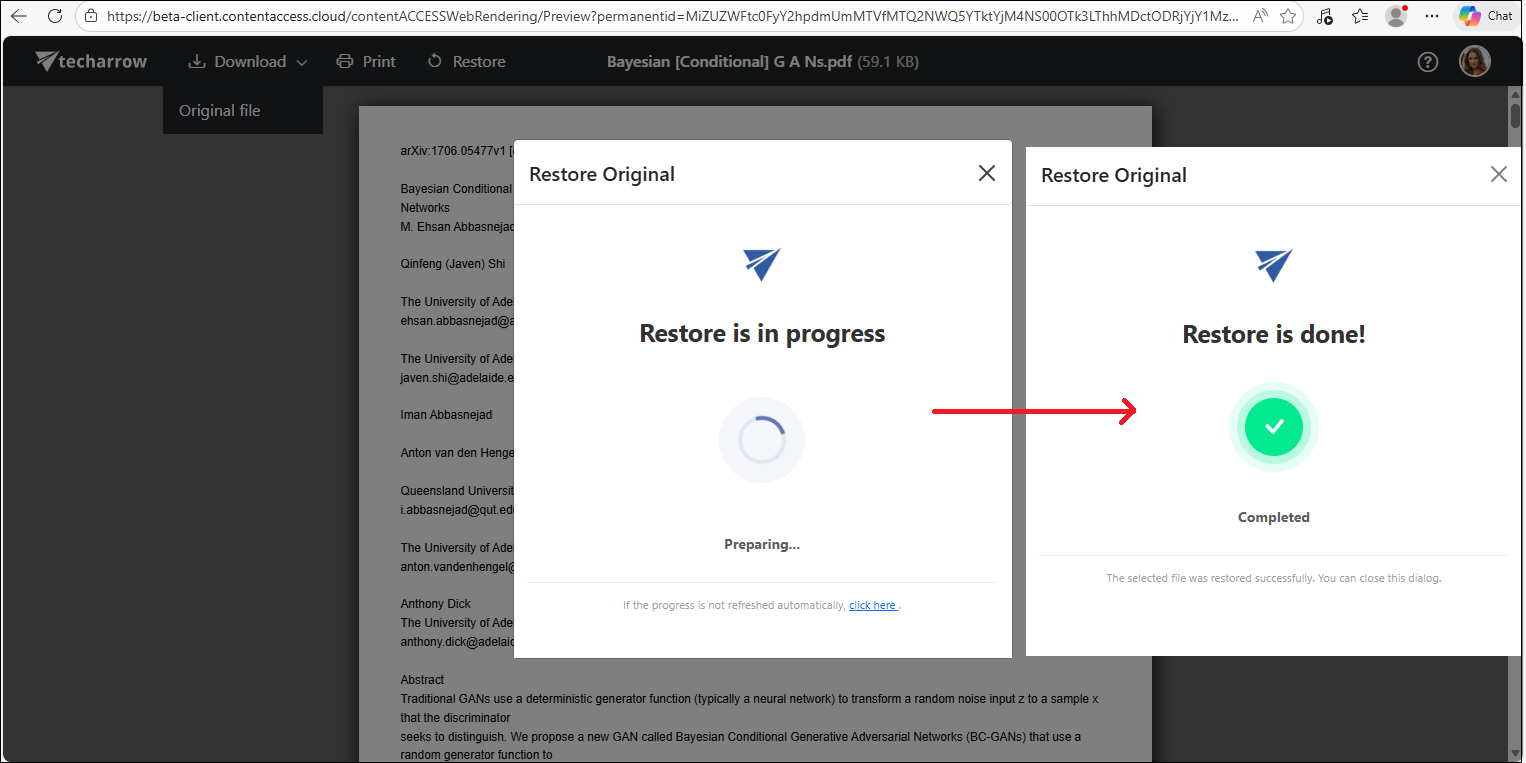
When you restore a file from the preview, the Restore in progress window appears, followed by Restore is done! once the process is complete. After closing the preview, the file is available again in Teams in its original format.